


India, Gulf, Turkey Challenge China in Africa’s Infrastructure Market
NEWS ANALYSIS
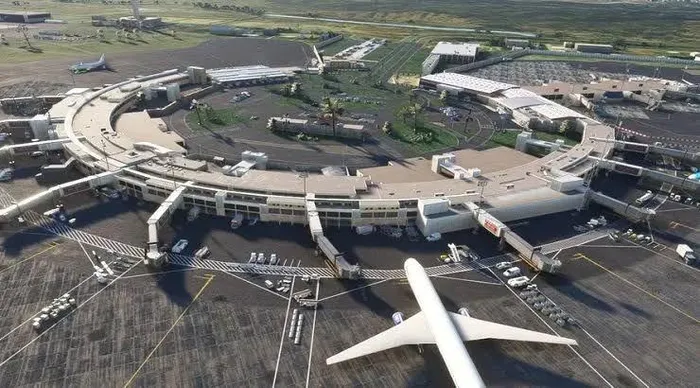
Image: Supplied.
Chinese firms continue to dominate Africa’s infrastructure market through low-cost financing and integrated project delivery. But India, the Gulf and Turkey are emerging as credible challengers, making the continent’s infrastructure race increasingly multipolar.
China may still be Africa’s biggest infrastructure builder, but its dominance is no longer uncontested. India, Turkey and the Gulf states are steadily expanding their footprint by leveraging finance, construction expertise and strategic partnerships, reshaping the continent’s infrastructure market.
The latest example comes from Kenya. Two years after the collapse of India’s Adani Group’s proposed modernisation of Nairobi’s Jomo Kenyatta International Airport, state-owned China Road and Bridge Corporation (CRBC) secured a US$1.2 billion (R19.35 billion) contract to execute the project. A similar trend was seen in Kenya’s highway sector. After France’s Vinci exited a major road concession, CRBC, along with another Chinese company, stepped in as developer. The original concession had faced criticism because it transferred most financial risks to the Kenyan government.
These projects reinforce China’s deep roots in Africa. According to local reports, CRBC alone has secured infrastructure contracts worth nearly US$9.3 billion (R149.97 billion) in Kenya.
China’s biggest advantage remains its ability to offer an integrated package. Chinese firms typically combine financing, engineering, construction and, in many cases, long-term operation under a single arrangement. This bundled approach significantly lowers project execution risks for African governments while reducing upfront financing constraints.
Analysts say Western companies struggle to match these offerings. Higher labour costs, stricter financing norms and greater risk premiums often make European and American firms less competitive in large infrastructure bids. Instead, many Western companies have shifted towards high-value consultancy, design and project management, where margins are higher and competition from Chinese firms remains limited.
China also benefits from structural economic advantages. As a capital-surplus economy with relatively lower engineering costs, it can finance and build large projects at prices that many competitors find difficult to match. Yet the competitive landscape is changing. Turkey and the Gulf states are increasingly winning projects once viewed as China’s domain.
Turkish engineering firm Yapi Merkezi has emerged as a major railway builder in East Africa. It constructed sections of Tanzania’s railway connecting Dar es Salaam with Dodoma. In Uganda, it replaced China Harbour Engineering as the lead contractor for the Standard Gauge Railway after prolonged delays in Chinese financing.
Turkey’s competitive edge lies in relatively lower labour costs combined with growing access to project finance.
The United Arab Emirates has adopted a different strategy. Leveraging abundant capital, Dubai-based DP World has built one of Africa’s largest port portfolios through long-term concessions. Its projects include expanding Somaliland’s Port of Berbera into a regional logistics hub, developing Senegal’s deep-water Ndayane Port and upgrading Mozambique’s Port of Maputo to handle larger vessels.
Unlike traditional construction companies, Gulf firms increasingly combine infrastructure investment with logistics, port management, aviation and trade connectivity.
India’s infrastructure ambitions in Africa remain more selective than China’s but are steadily expanding. The Adani Group’s unsuccessful airport proposal in Kenya highlighted India’s growing interest in African infrastructure. Although the project eventually reverted to a Chinese contractor, it reflected New Delhi’s willingness to compete in strategic transport assets.
Indian companies continue to enjoy goodwill across several African countries through development partnerships, capacity building and concessional financing. However, unlike China, India has yet to build a comparable ecosystem that seamlessly integrates financing, construction and long-term operations.
The old narrative of “China versus the West” is increasingly outdated. Today’s competition is far more complex. Chinese state-owned enterprises, Turkish contractors, Gulf investors, Indian conglomerates, African pension funds and multilateral development institutions are all competing for influence. Each brings a different strength. China offers scale and integrated financing. Turkey competes on engineering and labour costs. Gulf states leverage financial muscle and logistics expertise. India seeks opportunities through strategic partnerships and commercial investments.
For African governments, this wider pool of bidders increases bargaining power while reducing dependence on any single external partner. China remains the dominant infrastructure player on the continent. But Africa’s infrastructure market is no longer defined by one country alone. It is evolving into a multipolar arena where financing models, geopolitical influence and long-term strategic interests increasingly determine who builds the continent’s next generation of roads, ports, railways and airports.
* Edwin Naidu is head of Higher Education Media, publisher of www.ednews.africa.